









Holi 2026

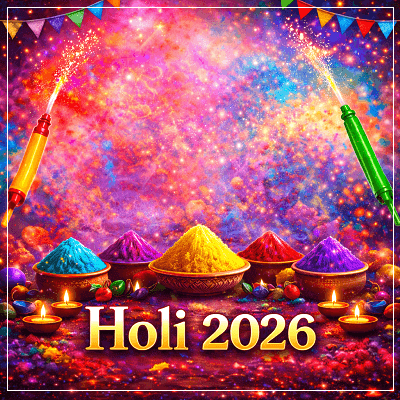
Holi 2026: A Divine Celebration of Renewal, Harmony, and Radiant Colors
Holi 2026 will once again illuminate hearts with devotion, happiness, and vibrant colors. More than just a seasonal festival, Holi represents the timeless Indian tradition of unity, forgiveness, and spiritual awakening. Celebrated on the full moon day of the sacred month of Phalguna, this festival marks the graceful arrival of spring and the renewal of nature’s beauty.
People across India celebrate Holi with joy and enthusiasm, while devotees in the Braj region—especially in Barsana, Nandgaon, Vrindavan, and Mathura—showcase celebrations whose grandeur draws admiration from around the world.The festival symbolizes the victory of light over darkness and inspires individuals to begin life afresh with positivity and courage.
The sacred ritual of Holika Dahan teaches us to surrender fear, ego, jealousy, and anger into the holy fire so that the next day, filled with colors and smiles, we may welcome joy and prosperity into our lives.
Book your Navgrah Puja today and invite harmony, success, protection, and positive planetary blessings into your life and family.
Holi 2026 Muhurat and Festival Dates
Holika Dahan – 2 March 2026 (Monday)
Auspicious Muhurat – 6:30 PM to 8:50 PM
(This timing is based on traditional Panchang calculations and may slightly vary by location.)
Rangwali Holi – 4 March 2026 (Wednesday)
On Phalguna Purnima, people across the country celebrate the festival of colors with joy and unity.
Mythological Roots and Spiritual Meaning
Holi carries deep spiritual wisdom rooted in ancient narratives. The legend of Prahlad and Hiranyakashipu highlights the power of unwavering devotion and righteousness. Despite immense challenges, Prahlad’s faith remained firm, ultimately proving that truth and virtue always triumph over arrogance and injustice.
Another belief connects Holi with the burning of Kamadeva by Lord Shiva. This episode symbolizes self-control and the victory over uncontrolled desires. The flames of Holika Dahan therefore represent purification—an opportunity to cleanse the mind of negativity and strengthen spiritual discipline.
Regional Traditions and Cultural Diversity
People across India celebrate Holi in unique ways, beautifully reflecting the country’s rich cultural diversity. In particular, North India observes the festival with great enthusiasm. Here, the celebrations begin with vibrant gulal and continue with devotional songs that fill the atmosphere with joy. Moreover, families prepare traditional sweets, while music and dance further enhance the festive spirit. As a result, the entire region comes alive with colors, harmony, and shared happiness. In Western India, the festival also symbolizes agricultural abundance and seasonal harvest. Southern regions observe Holi with devotional prayers and cultural rituals.
Schedule Navgrah Puja special occasion of Holi 2026 now to remove obstacles, strengthen fortune, and experience peace, prosperity, and divine guidance.
Braj’s Unique Holi Celebrations
The Braj region celebrates Holi with extraordinary devotion and charm. Barsana is famous for Lathmar Holi, where women playfully participate in a symbolic traditional ritual. In Vrindavan and Mathura, devotees celebrate with flower Holi, devotional singing, and colorful processions. Days before the main festival, the entire region resonates with festive spirit and spiritual energy.
Holi 2026 – The Transformative Power of Holika Dahan
Holika Dahan is more than a ritual; it is a spiritual transformation. After sunset, families gather to worship the sacred fire and symbolically offer their inner fears and negativity into the flames. The act signifies purification and renewed determination.
During the circumambulation of the fire, devotees offer prayers for family unity, prosperity, and well-being. Grains and sacred offerings placed into the fire represent agricultural prosperity and the hope for a fruitful year ahead.
Rangwali Holi: Celebration of Joy and Unity
Rangwali Holi, also known as Dhulandi, is a day of celebration, equality, and togetherness. People embrace one another, forgive past misunderstandings, and spread joy with colorful gulal. Each color carries a symbolic meaning—red reflects love, yellow peace, green renewal, and blue divine grace associated with Krishna.
Families fill their homes with music, laughter, festive sweets like gujiya, and refreshing drinks such as thandai. The celebration removes social boundaries and strengthens bonds of friendship and affection.
Holi as a Time for Spiritual Growth
Beyond the colors and festivities, Holi 2026 offers a powerful opportunity for spiritual reflection. Many devotees engage in chanting, meditation, and prayer on the night of Phalguna Purnima. It is believed that spiritual vibrations are heightened during this period, making it ideal for mantra recitation and self-purification.
Spiritual teachers often remind us that Holi is not merely about external colors but about coloring the heart with compassion, forgiveness, and harmony.
Reserve your Navgrah Puja slot today and balance planetary energies for health, wealth, growth, and lasting happiness.
Holi 2026 – Frequently Asked Questions
Question: When is Holi 2026 celebrated?
Answer: Holika Dahan will take place on 2 March 2026, and Rangwali Holi will be celebrated on 4 March 2026.
Question: What is the significance of Holika Dahan?
Answer: Holika Dahan symbolizes the victory of devotion and righteousness over ego and negativity, marking spiritual purification.
Question: Why is Holi especially famous in the Braj region?
Answer: Braj, including Barsana and Vrindavan, is known for unique traditions like Lathmar Holi and vibrant devotional celebrations.
Question: What does Rangwali Holi represent?
Answer: Rangwali Holi celebrates joy, forgiveness, unity, and the renewal of relationships through colors and festivity.
Question: Is Holi considered spiritually powerful?
Answer: Yes, Holi is believed to enhance spiritual vibrations, making it an ideal time for prayer, meditation, and Navgrah Puja.