









Vikram Samvat 2083

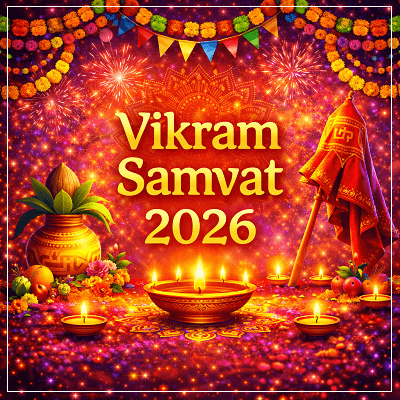
Significance of Hindu New Year and Vikram Samvat 2083
The Hindu New Year and Vikram Samvat 2083 represent the commencement of a new annual cycle in the traditional Indian calendar. More than a symbolic shift in dates, this sacred occasion reflects renewal of thoughts, clarity of intentions, and revival of positive actions. It inspires individuals and communities to move forward with discipline, faith, and structured planning.
Throughout India, the festival is observed in different forms such as Gudi Padwa, Ugadi, and Navreh. Although the names vary regionally, the deeper meaning remains consistent—welcoming a fresh phase of life with hope and responsibility. The Hindu New Year and Vikram Samvat 2083 encourage individuals to begin the year with gratitude, spiritual focus, and purposeful resolutions.
Book Ganesh Puja today and begin your new year with auspicious blessings.
Official Beginning Date and Traditional Importance
According to classical Panchang calculations, the Hindu New Year and Vikram Samvat 2083 commence on Chaitra Shukla Pratipada, 19 March 2026. Traditionally, this sacred day is closely associated with the beginning of creation and, therefore, marks the opening of a new cosmic time cycle.
From this point onward, religious observances, spiritual disciplines, and new initiatives are considered highly favorable. Consequently, devotees begin the day with purification rituals, prayers, and meaningful resolutions. Moreover, the arrival of the Hindu New Year creates an atmosphere of renewed determination, mental calmness, and positive planning for the months ahead. Thus, this period encourages individuals to move forward with clarity, faith, and constructive intent.
Regional Celebrations and Cultural Unity – Vikram Samvat 2083
The Hindu New Year and Vikram Samvat 2083 showcase India’s cultural diversity while reinforcing national unity. People in Maharashtra celebrate the day as Gudi Padwa, symbolizing victory and prosperity. In Karnataka, Andhra Pradesh, and Telangana, communities observe it as Ugadi, where traditional preparations reflect the different experiences of life. In Kashmir, people celebrate Navreh, marking renewal and spiritual awareness.
Despite regional customs and rituals, the central message of Hindu New Year and Vikram Samvat 2083 remains identical—embracing change with optimism and strengthening collective harmony.
Legacy of King Vikramaditya
The origin of the Hindu New Year and Vikram Samvat 2083 is historically connected to King Vikramaditya. According to traditional beliefs, he established this calendar era after restoring justice and stability in his kingdom. As a result, this system gradually gained recognition among people. Over time, it evolved into a respected and widely followed method of timekeeping across the Indian subcontinent. Furthermore, its cultural and historical importance continues to influence traditional celebrations even today.
Ancient texts highlight his courage, wisdom, and ethical leadership. Stories associated with Vikram and Betal further emphasize intelligence and moral strength. The continuation of Hindu New Year reflects these timeless values of integrity, discipline, and righteous conduct.
Astronomical Foundation and Calendar Structure
The Hindu New Year and Vikram Samvat 2083 are based on a scientifically structured lunisolar calendar. It harmonizes lunar months with the solar year to maintain seasonal alignment. Elements such as Tithi, Nakshatra, Yoga, and Karana ensure accuracy in determining festivals and religious observances.
To maintain balance with natural cycles, an additional month known as Adhik Maas is periodically introduced. This carefully designed framework ensures synchronization between agriculture, climate patterns, and spiritual events. As a result, Hindu New Year continue to guide traditional observances with precision.
Book Durga Puja now and seek divine strength for the year ahead.
Annual Raja and Mantri Analysis – Vikram Samvat 2083
On the first day of Hindu New Year and Vikram Samvat 2083, Panchang scholars assess planetary alignments to designate the symbolic Raja (King) and Mantri (Minister) for the year. This traditional evaluation offers insight into possible trends in governance, rainfall, agriculture, trade, and public welfare.
Through detailed interpretations, astrologers make predictions regarding economic balance, crop production, and social stability. Therefore, Hindu New Year hold both spiritual relevance and practical importance for societal planning.
Expected Direction of the Year
Traditional interpretations suggest that Hindu New Year and Vikram Samvat 2083 may bring structured progress across multiple sectors. Many regions are likely to experience agricultural stability, improved trade conditions, and balanced development.
Although occasional regional variations or temporary disruptions may arise, the overall outlook appears steady and forward-moving. The year emphasizes disciplined planning, thoughtful decisions, and responsible action. Hindu New Year encourage individuals and institutions alike to approach the future with confidence and awareness.
Inner Growth and Spiritual Renewal
From a personal standpoint, Hindu New Year and Vikram Samvat 2083 offer a valuable opportunity for reflection and transformation. This period offers an ideal opportunity to release past burdens, adopt healthier routines, and set clear goals. You can begin new ventures, strengthen relationships, expand knowledge, and actively engage in devotional practices for positive results.
This sacred transition promotes unity, peace, and ethical living within society. The Hindu New Year and Vikram Samvat 2083 therefore signify more than a chronological change—they represent a meaningful opportunity for inner refinement, stability, and collective progress.
Take a sacred pledge for Ganesh Puja today and welcome the new year with faith and determination.
Frequently Asked Questions (FAQs) – Hindu New Year and Vikram Samvat 2083
Question: When does Hindu New Year and Vikram Samvat 2083 begin?
Answer: Hindu New Year and Vikram Samvat 2083 begin on Chaitra Shukla Pratipada, which falls on 19 March 2026 according to traditional Panchang calculations.
Question: Why is Vikram Samvat important in Indian tradition?
Answer: Vikram Samvat is one of the oldest calendar systems in India. People consider it culturally, historically, and spiritually significant and widely use it to determine festivals and auspicious dates.
Question: How is the Hindu New Year celebrated in different regions?
Answer: People celebrate this festival as Gudi Padwa in Maharashtra, Ugadi in Karnataka, Andhra Pradesh and Telangana, and Navreh in Kashmir, each reflecting unique customs while sharing the same spirit of renewal.
Question: What is the significance of Chaitra Shukla Pratipada?
Answer: This day marks the beginning of the annual cycle in the traditional calendar and offers an auspicious time to begin new ventures and spiritual practices.
Question: Is Vikram Samvat based on scientific calculations?
Answer: Yes, it follows a structured lunisolar system that aligns lunar months with the solar year, ensuring seasonal balance and accurate festival determination.